

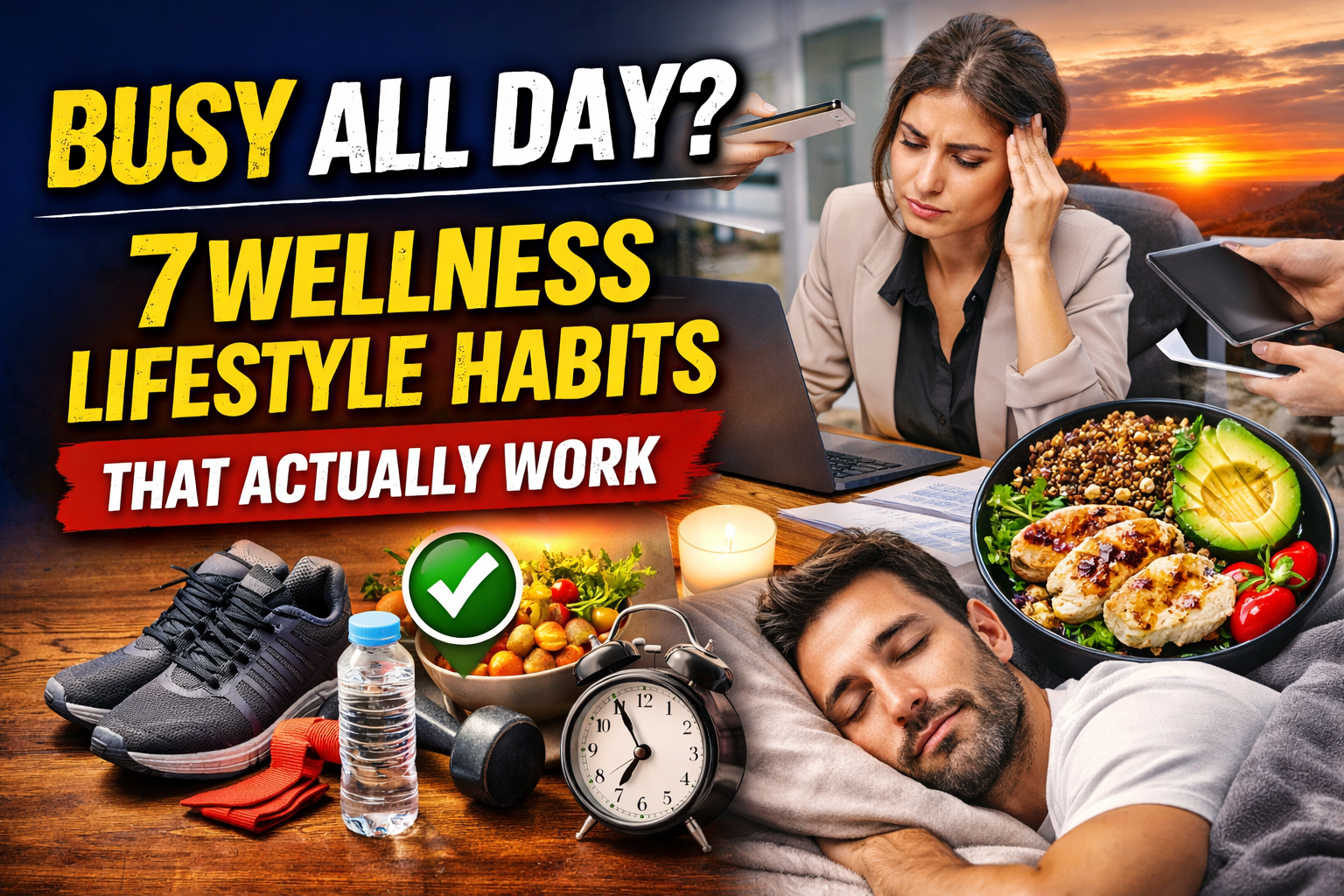
Overview:
Why Being “Busy” Is Not the Real Problem (Energy Is)
Most people say they don’t have time. However, time isn’t usually the real issue — energy is. You can have a free hour and still feel incapable of doing anything meaningful. In fact, modern research in physiology and behavioral science shows that chronic stress, poor sleep, unstable blood sugar, and constant digital stimulation quietly drain your cognitive and physical reserves. Consequently, busyness becomes a symptom, not the cause. Ultimately, the real constraint is depleted energy systems. When your nervous system is overloaded, even small tasks feel heavy. Therefore, sustainable wellness, especially for busy people, begins by protecting and restoring energy — not by adding more to your calendar.
The Science of Micro-Habits: Why Small Changes Win
Big transformations fail for one simple reason: they demand too much willpower. In contrast, behavioral science consistently shows that small, repeatable actions are far more sustainable than dramatic overhauls. As a result, micro-habits reduce friction, lower psychological resistance, and build identity gradually. Neurologically, repetition strengthens neural pathways through a process called synaptic reinforcement. Indeed, the brain prefers consistency over intensity. When a habit feels easy, you’re more likely to repeat it — and repetition is what creates lasting change. In fact, a two-minute action done daily beats a one-hour routine done occasionally. Ultimately, small changes don’t look impressive at first, but biologically and psychologically, they compound into meaningful results.
Habit #1: The 2-Minute Morning Reset
Mornings set the neurological tone for the entire day. Within the first 30–45 minutes after waking, cortisol naturally rises — a process known as the cortisol awakening response, well documented in sleep and endocrinology research. Instead of reaching for your phone and flooding your brain with stimulation, use two minutes strategically.
The 2-Minute Morning Reset is simple:
- First, drink a glass of water to counter overnight dehydration (even mild dehydration affects cognition).
- Next, take 5 slow, deep breaths to regulate your nervous system.
- Finally, do light mobility or a quick stretch to increase circulation.
Together, these micro-actions activate alertness without overstimulating stress pathways. Moreover, studies in psychophysiology show that controlled breathing can lower sympathetic nervous system activity and improve focus. As a result, small, intentional input prevents reactive behavior later. Of course, two minutes won’t change your life overnight — yet, repeated daily, they recalibrate your mornings.
Habit #2: Movement Snacks Throughout the Day
Extended sitting is now strongly associated with higher risks of cardiovascular disease, metabolic dysfunction, and premature mortality — even in people who exercise regularly. Large epidemiological studies and guidance from organizations like the World Health Organization emphasize reducing sedentary time in addition to structured workouts. That’s where “movement snacks” come in.
Instead of relying only on a single gym session, insert short bursts of activity throughout the day:
- 2–5 minutes of walking every 60–90 minutes
- Bodyweight squats or desk push-ups
- Light mobility drills for hips, shoulders, and spine
- Taking stairs instead of elevators
Studies indicate that breaking up prolonged sitting improves post-meal glucose control and supports circulation. Even brief muscular contractions help regulate blood sugar and reduce stiffness. Think of movement as a metabolic signal, not just exercise. For busy people, these micro-bursts are realistic, science-backed, and surprisingly powerful over time.
Habit #3: Strategic Nutrition for Sustained Energy
Energy crashes are rarely random — they’re often metabolic. In fact, evidence in nutritional science consistently shows that large spikes in blood glucose followed by rapid drops can impair concentration, increase fatigue, and stimulate hunger shortly after eating. Moreover, highly refined carbohydrates consumed alone tend to accelerate this cycle.
Therefore, strategic nutrition focuses on stability. Combine:
- First, lean protein (supports satiety and muscle repair)
- Next, fiber-rich carbohydrates (slow glucose absorption)
- Finally, healthy fats (help moderate glycemic response)
Together, this macronutrient balance improves post-meal blood sugar control and promotes sustained energy. Indeed, evidence from metabolic studies shows that protein and fiber together reduce glycemic variability compared to refined carbohydrates alone. For busy days, simplicity matters: pre-plan balanced snacks, avoid skipping meals, and minimize ultra-processed foods.
Ultimately, you don’t need a perfect diet — you need predictable fuel. As a result, stable blood sugar supports cognitive performance, mood regulation, and long workdays without the rollercoaster effect.
Habit #4: Intentional Mental Breaks (Not Social Media Scrolls)
Mental fatigue accumulates quietly. Moreover, cognitive studies demonstrate sustained attention declines after prolonged focus, reducing decision quality and increasing stress markers. In contrast, true recovery activates the parasympathetic nervous system — not endless scrolling. Unfortunately, social media often maintains cognitive stimulation, keeping dopamine and stress pathways engaged instead of allowing neural reset.
Intentional mental breaks are different. Step away from screens. Take slow breaths. Look at natural light. Walk briefly. Studies in psychophysiology show even short breaks improve attention restoration and emotional regulation. Think of it as neurological maintenance. Five real minutes of disengagement can restore clarity far more effectively than twenty minutes of digital distraction.
Habit #5: The 60-Minute Digital Sunset
Your brain does not recognize “just one more scroll” as harmless. In reality, light exposure at night — especially blue-enriched light from phones and laptops — has been shown in sleep research (including studies published in journals like PNAS and Sleep Health) to suppress melatonin production and delay circadian rhythms. Put simply, screens tell your brain it’s still daytime.
A 60-minute digital sunset creates a physiological transition. One hour before bed:
- Turn off work emails and notifications
- Dim household lights
- Avoid stimulating content
- Switch to low-light, offline activities (reading, journaling, stretching)
Moreover, studies in chronobiology consistently demonstrate that consistent pre-sleep routines improve sleep onset and overall sleep quality. As a result, protecting that final hour helps lower cognitive arousal and supports hormonal regulation overnight. For instance, busy individuals should view better sleep not as luxury — but as recovery infrastructure. Ultimately, one protected hour can dramatically improve the next 16.
Habit #6: Sleep as a Non-Negotiable Performance Tool
Sleep is not downtime — it’s biological optimization. In fact, research from institutions like the CDC and the American Academy of Sleep Medicine consistently shows that adults need at least 7 hours of sleep for optimal cognitive, metabolic, and immune function. Moreover, chronic sleep restriction is associated with impaired glucose regulation, increased inflammation, reduced attention, and slower reaction times.
From a performance perspective, sleep directly affects decision-making, emotional regulation, and productivity. Indeed, neuroimaging studies demonstrate that sleep deprivation reduces activity in the prefrontal cortex — the region responsible for judgment and self-control — while amplifying stress reactivity.
For busy individuals, protecting sleep is strategic, not indulgent. Therefore, set consistent bed and wake times. Keep the room cool and dark. Avoid caffeine late in the day. Ultimately, when sleep becomes non-negotiable, energy stabilizes, focus sharpens, and resilience improves. High performers don’t sacrifice sleep — they defend it.
Habit #7: Weekly Reset Ritual (15 Minutes That Change Everything)
By the way, high performers rarely rely on motivation — they rely on structure. A weekly reset ritual is a brief, strategic pause that prevents chaos from accumulating. According to behavioral science, planning reduces cognitive load and decision fatigue, preserving mental bandwidth for meaningful work. Even more, short planning sessions improve follow-through and goal adherence.
In just 15 minutes, you can recalibrate your week:
- Review your calendar and commitments.
- Identify 1–3 health priorities (movement, meals, sleep).
- Pre-plan simple meals or snacks.
- Schedule workout or movement blocks.
- Clear minor tasks that create mental clutter.
Furthermore, research in self-regulation and organizational psychology indicates that structured reflection enhances consistency and reduces stress. Instead of reacting daily, you design proactively.
The weekly reset is not about perfection. Rather, it’s about direction. Small course corrections prevent burnout later. When you intentionally align your schedule with your wellness habits, you reduce friction before it appears. Consequently, fifteen focused minutes can eliminate hours of scattered stress during the week — and that compounding effect is powerful.
How to Implement All 7 Without Feeling Overwhelmed
Trying to implement all seven habits at once is the fastest way to abandon them. Behavioral research, including studies on habit formation from University College London, shows that consistency in small actions predicts long-term adherence far more than intensity. Start with just two habits — one physical (like movement snacks) and one recovery-based (like a digital sunset). Master repetition before expansion.
Use habit stacking, a concept supported by behavioral psychology: attach a new habit to an existing one. Once you’ve brushed your teeth, drink water. Following lunch, walk for three minutes. When you shut your laptop, dim the lights. Pairing behaviors reduces decision fatigue and increases automaticity.
Simple 7-day plan:
Day 1–2: Morning reset + hydration
Day 3–4: Add movement snacks
Day 5: Add strategic nutrition
Day 6: Add digital sunset
Day 7: Weekly reset ritual
Quick checklist:
✔ Morning reset
✔ Move every 60–90 minutes
✔ Balanced meals
✔ Intentional breaks
✔ Screen cutoff
✔ 7+ hours sleep
✔ Weekly review
Common mistakes? Doing too much, skipping sleep, and quitting after one imperfect day. Progress thrives on consistency, not perfection.
For more practical, science-backed wellness strategies, follow us on Instagram:
👉 https://instagram.com/naturith.us
Results may vary. Individual experiences are not guaranteed.